
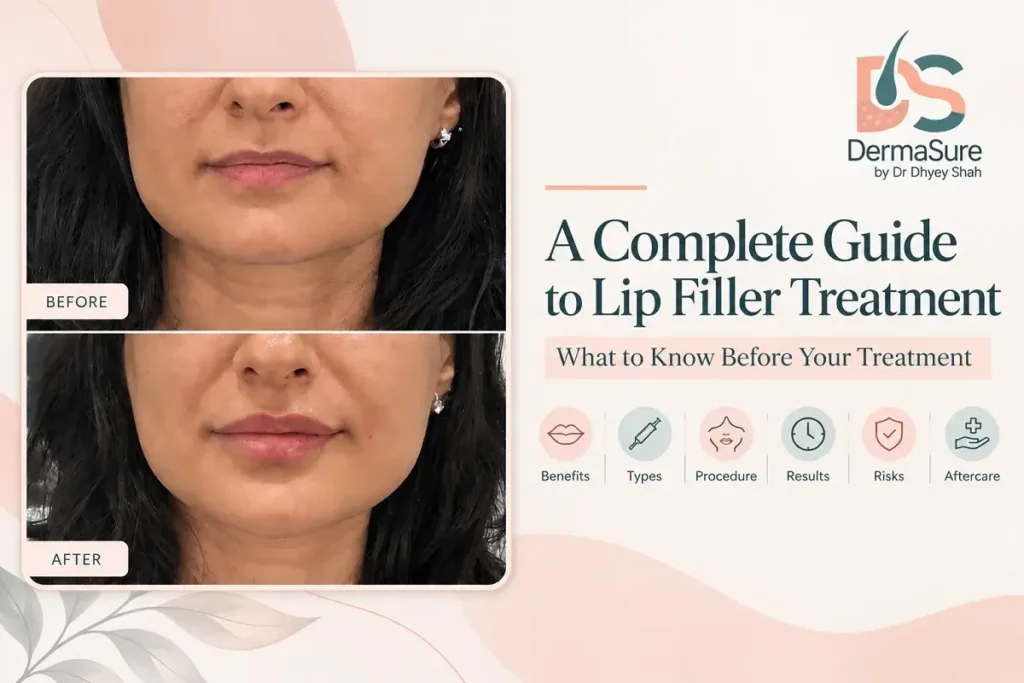
If you are considering lip fillers, you may have questions about how the treatment works, which type of filler is used, how natural the results can look, how long they last, and what risks you should understand before treatment.
These are important questions because lip filler is not simply about adding volume. The appropriate treatment depends on your lip anatomy, facial proportions, expectations, and the specific change you want to achieve.
In this guide, I explain lip fillers from a dermatologist’s perspective — including what they are, the different types, how the procedure works, what results you can expect, how long they may last, possible side effects and complications, aftercare, and how I approach treatment planning at Dermasure Clinic.
Important: This article is intended for general educational purposes and does not replace an individual medical consultation. Whether lip filler treatment is appropriate for you depends on your medical history, facial anatomy, expectations, and clinical assessment.
What Are Lip Fillers?
Lip fillers are injectable dermal fillers used to add or restore volume and, depending on the treatment plan, improve lip definition, shape, or symmetry.
One of the most commonly used materials for lip enhancement is hyaluronic acid (HA). Hyaluronic acid is naturally present in the human body and is also used in specially formulated injectable dermal fillers. Different filler products have different physical properties and intended uses.
The important point I want patients to understand is that lip fillers are not simply about making the lips bigger.
Depending on a patient’s anatomy and goals, treatment may be planned to:
- Enhance lip volume
- Improve lip definition
- Define the vermilion border
- Enhance the Cupid’s bow
- Improve selected forms of asymmetry
- Restore some volume lost with age
- Improve the proportion between the upper and lower lips
- Create a subtle, balanced enhancement
The appropriate goal is different for every patient.
In the United States, the FDA has approved specific dermal filler products for specific uses, including increasing lip fullness. These approvals apply to particular products, indications, and populations, so patients should discuss the exact product being considered with their treating doctor rather than assuming every injectable filler has the same regulatory status.
Why Do People Consider Lip Fillers?
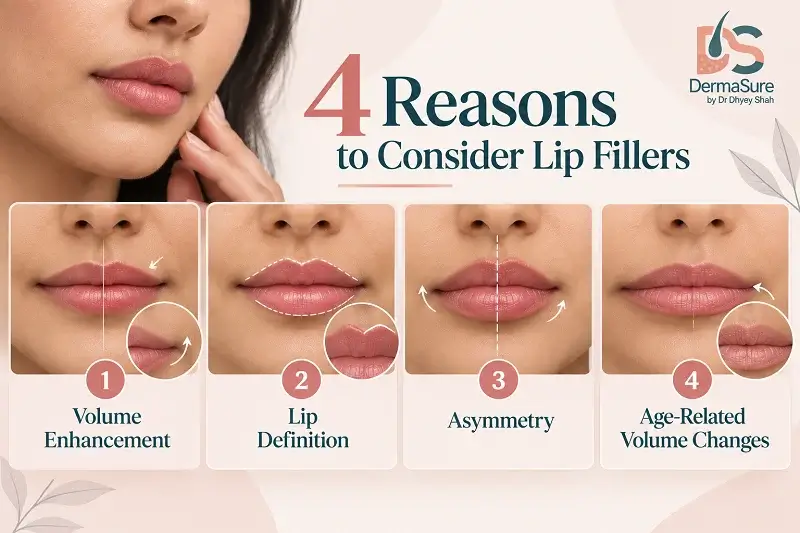
There is no single reason why someone chooses lip fillers.
Some patients naturally have thinner lips and want a subtle increase in volume. Others are more concerned about definition or asymmetry. Some notice gradual changes in lip volume and definition with age.
Lip Filler for Volume Enhancement
If the lips have relatively little natural volume, carefully planned filler can increase fullness.
The amount of enhancement should be based on the patient’s existing anatomy rather than on a standard amount of filler.
Lip Filler for Lip Definition
Sometimes a patient is less concerned about overall volume and more interested in the shape and definition of the lips.
In selected cases, filler may be used strategically around areas such as the vermilion border or Cupid’s bow.
Lip Filler for Asymmetry
Perfect facial symmetry is uncommon. Mild differences between the right and left sides of the lips can be normal.
In some patients, carefully placed filler can improve the appearance of selected forms of asymmetry.
Lip Filler for Age-Related Volume Changes
The lips can change with age. Volume, definition, and the appearance of the surrounding area may gradually change.
For suitable patients, lip fillers may be considered as one component of an individualized facial rejuvenation plan.
Can Lip Fillers Look Natural?
Yes. However, natural-looking results depend heavily on appropriate treatment planning, suitable product selection, and injection technique.
You do not have to want dramatically larger lips to consider lip fillers. For many patients, the goal is simply to look like themselves with slightly improved definition, proportion, or volume.
A conservative approach may be appropriate for patients who want subtle enhancement. The American Academy of Dermatology also emphasizes conservative treatment when aiming for natural-looking filler results.
The goal should be to create an improvement that fits the patient’s face rather than reproduce somebody else’s result.
What Are the Different Types of Lip Fillers?
Patients often ask me, “Which type of lip filler is best?”
There isn’t one universal answer.
Different dermal fillers have different properties, and the appropriate product depends on factors such as the treatment area, desired result, product characteristics, and individual patient considerations.
Hyaluronic Acid Lip Fillers
Hyaluronic acid is widely used in dermal filler treatments.
HA fillers are formulated as injectable gels, but not all HA fillers are identical. They can differ in their physical properties, which can influence how they behave in tissue.
At Dermasure Clinic, I may use premium HA filler products such as Juvéderm, Restylane, or ART Filler, depending on the patient’s individual treatment plan and the product appropriate for the intended use.
I don’t believe in choosing a filler simply because it is popular on social media.
The product should be selected according to the patient’s anatomy, treatment objective, and the clinical characteristics of the specific filler.
Patient tip: Before treatment, ask your doctor which filler is being used, why it has been selected for you, and what its expected benefits and risks are.
How Do I Decide Which Lip Filler Is Suitable for a Patient?

This is where an in-person consultation becomes important.
Two patients can both say, “I want fuller lips,” but their treatment plans may be completely different.
During consultation, I consider factors such as:
- Existing lip volume
- Upper and lower lip proportions
- Facial proportions
- Lip symmetry
- Lip shape
- Cupid’s bow
- Vermilion border
- Skin and soft-tissue characteristics
- Previous filler treatments
- Medical history
- Patient expectations
- The degree of enhancement the patient actually wants
I also want to understand what the patient doesn’t want.
For example, some patients specifically tell me that they don’t want an obviously augmented appearance. That changes the conversation and treatment planning.
A good lip filler treatment should start with the patient’s face and goals — not with a predetermined syringe or a trend seen online.
How Does Lip Filler Treatment Work?
Lip filler treatment involves injecting a selected dermal filler into specific areas of the lips using an appropriate technique.
The exact injection technique and placement depend on the patient’s anatomy, the filler being used, and the intended result.
The lips have a complex vascular anatomy. For this reason, dermal filler injection is a medical procedure that requires appropriate anatomical knowledge and the ability to recognize and manage complications.
Step 1: Consultation
Before treatment, I discuss the patient’s goals and examine the lips and surrounding facial structures.
I also review relevant medical history and previous cosmetic procedures.
Step 2: Treatment Planning
I determine whether lip fillers are appropriate and, if so, which areas may benefit from treatment.
The objective is not necessarily to add the maximum possible volume.
Step 3: Preparation
The treatment area is prepared appropriately before the procedure.
Depending on the treatment and product, measures may be used to improve patient comfort.
Step 4: Filler Injection
The selected filler is injected into the planned areas using an appropriate technique.
Step 5: Immediate Assessment
After treatment, the lips are assessed and the immediate appearance is reviewed.
Patients should remember that early swelling can temporarily affect the appearance.
Do Lip Fillers Hurt?
The experience varies from patient to patient.
Some people describe a brief pinching, pressure, or stinging sensation during injection. The lips can also be more sensitive than some other treatment areas.
Depending on the treatment and the patient’s needs, different measures may be used to improve comfort.
I explain what the patient can reasonably expect rather than promising that the procedure will be completely painless.
How Long Does Lip Filler Treatment Take?
The exact appointment time varies depending on consultation, preparation, treatment, and post-treatment assessment.
Many filler procedures can be completed in approximately 15–30 minutes, although treatment time varies according to the area and individual circumstances.
When Will You See Lip Filler Results?
One of the reasons patients choose HA fillers is that an improvement in volume can generally be seen relatively soon after treatment.
However, there is an important distinction between the immediate appearance and the settled result.
Immediately after treatment, you may experience:
- Swelling
- Redness
- Tenderness
- Mild bruising
These temporary effects can make the lips appear different during the early recovery period.
HA fillers can provide an early improvement in volume, but the appearance immediately after treatment can be affected by swelling and other temporary treatment-related effects.
Why I Tell Patients Not to Judge the Result Too Quickly
When a patient looks in the mirror immediately after treatment, it is natural to focus on swelling.
I usually explain that the early appearance should not automatically be treated as the final result.
Allowing the initial swelling to settle gives us a more meaningful view of the outcome.
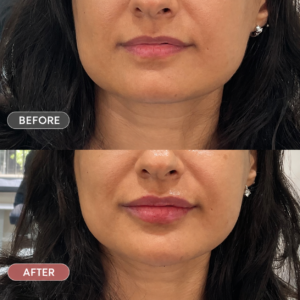
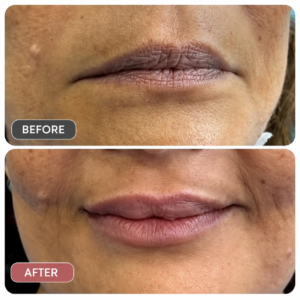
caption:
Real patient treated at Dermasure Clinic, Ahmedabad. Images are shared with appropriate patient consent for educational purposes. Individual results vary.
How Long Do Lip Fillers Last?
One of the most searched questions about lip fillers is
“How long do lip fillers last?”
There isn’t one fixed answer for every patient.
The duration can vary depending on:
- The specific filler product
- Amount of filler used
- Treatment area
- Individual metabolism
- Tissue characteristics
- Movement of the treated area
- Injection technique
- Individual response
The American Academy of Dermatology gives approximately 4–12 months as a general duration range for hyaluronic acid gel fillers, although actual longevity varies between individuals and treatment areas.
I generally explain to patients that lip filler results may last approximately 9–12 months, depending on the filler used and individual patient factors.
I prefer to describe this as an expected range rather than a guarantee.
Do Lip Fillers Need Maintenance?
Because commonly used HA fillers are temporary, some patients choose repeat treatment when the effect has reduced.
However, I don’t recommend automatically adding more filler simply because a certain number of months have passed.
The decision should be based on your current appearance, treatment goals, previous response, and clinical assessment.
What Are the Benefits of Lip Fillers?
When appropriately selected and performed, lip fillers may provide several aesthetic benefits.
Potential treatment goals include:
- Increasing lip volume
- Improving lip definition
- Enhancing the Cupid’s bow
- Improving selected forms of asymmetry
- Restoring some lost volume
- Improving lip proportions
- Creating a subtle enhancement
- Supporting overall facial balance
There is an important distinction between possible treatment benefits and guaranteed outcomes.
Every patient’s anatomy and response are different.
My goal is to create an improvement that fits the patient’s face rather than trying to reproduce somebody else’s result.
What Are the Common Side Effects of Lip Fillers?
Like any medical procedure, lip filler treatment has potential side effects and complications.
Common short-term effects can include:
- Swelling
- Redness
- Bruising
- Tenderness
- Pain
- Itching
These effects commonly occur shortly after injection and often improve over time. The FDA identifies swelling, bruising, redness, pain, tenderness, and itching among the common risks associated with dermal fillers.
The exact recovery period varies between individuals.
What Are the Risks of Lip Fillers?
Patients should understand the risks before treatment rather than hearing only about the benefits.
Less common complications can include:
- Infection
- Nodules or lumps
- Inflammatory reactions
- Allergic reactions
- Skin injury
- Tissue necrosis
One of the most serious complications occurs when filler unintentionally enters a blood vessel.
A vascular complication can cause tissue injury and, in rare cases, serious outcomes including skin necrosis, vision abnormalities or blindness, and stroke. The FDA identifies accidental injection into a blood vessel as the most serious risk associated with dermal fillers.
This is one reason patients should choose a qualified medical professional who understands facial anatomy and is prepared to recognize and manage complications.
Lip fillers are a medical procedure.
When Should You Seek Urgent Medical Attention After Filler?
Most post-treatment swelling, bruising, and tenderness are temporary. However, certain symptoms require prompt medical assessment.
Contact your treating doctor urgently if you experience symptoms such as:
- Unusual or severe pain during or shortly after treatment
- Significant whitening or unusual discoloration of the skin
- New changes in vision
- Sudden weakness, numbness, difficulty speaking, or other symptoms suggestive of a stroke
These symptoms can indicate a serious vascular complication and should not be ignored.
What Should You Do After Lip Filler Treatment?
Aftercare instructions should be personalized according to your treatment.
Temporary swelling, redness, tenderness, and bruising can occur after filler injections. The American Academy of Dermatology recommends avoiding strenuous exercise until the following day, limiting sun exposure, and avoiding unnecessary touching of the treated area unless your dermatologist gives different instructions.
At Dermasure Clinic, I provide patients with specific post-treatment instructions, including what to expect during recovery, when follow-up may be required, and when they should contact the clinic.
Rather than following generic social-media advice, follow the instructions provided by your treating doctor.
What Should You Tell Your Dermatologist Before Getting Lip Fillers?
Before treatment, tell your doctor about:
- Previous filler treatments
- Previous cosmetic procedures
- Current medications
- Supplements
- Known allergies
- Previous reactions to injectable treatments
- Relevant medical conditions
- Active skin infections or inflammation
- Your expectations and desired outcome
The FDA recommends discussing your medical history, allergies, medications, previous filler treatments, and relevant conditions with your healthcare professional before treatment.
If you are pregnant or breastfeeding, discuss this with your doctor before considering treatment. The safety of dermal fillers during pregnancy and breastfeeding has not been established.
Who Is a Good Candidate for Lip Fillers?
There is no simple checklist that makes someone automatically suitable for lip fillers.
A consultation is important because treatment suitability depends on the individual’s anatomy, health, expectations, and treatment goals.
People may consider lip filler treatment for:
- Naturally thin lips
- Reduced lip volume
- Mild asymmetry
- Reduced lip definition
- Age-related volume changes
- A desire for subtle enhancement
But the most important question is not simply:
“Do you want lip fillers?”
It is:
“Is lip filler the appropriate treatment for what you want to change?”
Sometimes the answer may be yes. Sometimes another treatment — or no treatment at all — may be more appropriate.
That is why I believe consultation should come before treatment.
When Should Lip Filler Treatment Be Delayed?
Treatment may need to be postponed or reconsidered in certain circumstances, including active infection or inflammation around the treatment area.
Certain medical conditions, allergies, medications, or previous reactions may also influence treatment suitability.
If you have a medical condition or are taking medication, don’t assume that a cosmetic injectable is automatically appropriate for you. Discuss your medical history with your treating doctor before proceeding.
Lip Fillers vs. Lip Flip: What’s the Difference?
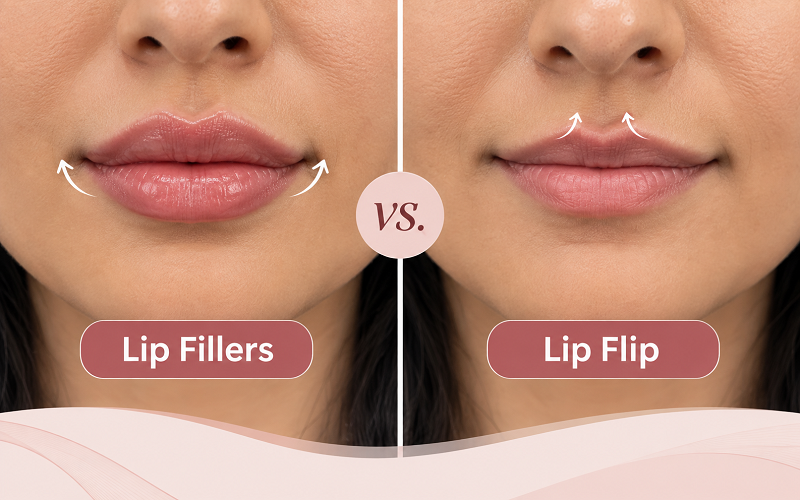
These treatments are often confused, but they are not the same.
Lip fillers use a dermal filler to add volume or modify the shape and definition of the lips.
A lip flip, on the other hand, generally uses botulinum toxin to temporarily affect the movement of muscles around the upper lip. It does not add the same type of physical volume as a dermal filler.
Which approach is appropriate depends on what you actually want to change.
If your primary concern is volume, a filler may be considered. If your concern is related to upper-lip movement or appearance, another approach may be discussed.
A consultation can help determine the appropriate option.
How Much Do Lip Fillers Cost in Ahmedabad?
There isn’t one universal price for lip fillers in Ahmedabad because treatment cost depends on factors such as:
- The filler product selected
- The treatment area
- Amount of filler required
- Number of syringes
- Individual treatment plan
Patients should understand what they are paying for and why a particular treatment has been recommended rather than choosing an injectable medical procedure purely based on the lowest advertised price.
My Approach to Lip Filler Treatment at Dermasure Clinic
At Dermasure Clinic, I follow a personalized approach to aesthetic treatment.
I don’t believe every patient should receive the same amount of filler or the same treatment plan.
1. Understand the Patient
I first want to know what you would like to change and, equally importantly, what you don’t want to change.
2. Examine the Anatomy
I assess the lips and surrounding facial proportions rather than evaluating the lips in isolation.
3. Discuss Realistic Expectations
We discuss what lip fillers can realistically achieve and what they cannot.
4. Select the Appropriate Treatment
If filler is suitable, the product and treatment approach are selected according to the clinical assessment.
5. Focus on Balance
The goal is not maximum volume.
The goal is an appropriate result for that individual patient.
6. Follow Up
The response to treatment can be assessed after the initial swelling has settled, and further treatment can be considered when clinically appropriate.
Frequently Asked Questions About Lip Fillers
What are lip fillers?
Lip fillers are injectable dermal fillers used to add or restore lip volume and, depending on the treatment plan, improve lip definition, shape, or symmetry. Hyaluronic acid is commonly used in lip filler products.
What is the best type of lip filler?
There is no single filler that is universally best for every patient. Product selection depends on the patient’s anatomy, treatment goal, product characteristics, and clinical assessment.
How long do lip fillers last?
Duration varies. The American Academy of Dermatology gives approximately 4–12 months as a general range for hyaluronic acid gel fillers, while individual results can vary. At Dermasure Clinic, I generally explain that lip filler results may last around 9–12 months depending on the product and patient.
Are lip fillers permanent?
Most commonly used HA fillers are temporary. The body gradually breaks them down, so repeat treatment may eventually be required if a patient wants to maintain the result.
Do lip fillers look natural?
They can look natural when the treatment is appropriately planned and performed. Conservative treatment, suitable filler selection, knowledge of facial anatomy, and appropriate injection technique all matter.
Are lip fillers safe?
Dermal fillers have potential benefits and risks. Common reactions include swelling, bruising, redness, pain, and tenderness. Rare but serious vascular complications can occur, which is why appropriate medical expertise and patient selection are important.
How soon will I see lip filler results?
Some improvement can be seen soon after treatment, but early swelling can affect the appearance. The result should be assessed after the initial treatment-related swelling has settled.
Can lip fillers be dissolved?
Some hyaluronic acid fillers can be reduced using hyaluronidase when clinically appropriate. Whether this is possible depends on the material used and the clinical situation. Any such intervention should be performed by a qualified healthcare professional.
How much do lip fillers cost in Ahmedabad?
There is no single price because treatment cost depends on the filler, amount required, and individual treatment plan. A personalized quote can be discussed during consultation at Dermasure Clinic.
Can men get lip fillers?
Yes. Lip filler treatment can be considered by men as well as women. Treatment planning should be based on individual facial anatomy and the patient’s goals rather than gender alone.
Can I get lip fillers if I have very thin lips?
Possibly. However, the amount and technique need to be individualized. Patients with naturally thin lips may require a conservative approach if the goal is a natural-looking result.
Should I choose lip fillers based on price?
An injectable medical procedure should not be chosen based solely on price.
Consider the clinician’s qualifications, experience, product being used, consultation process, treatment environment, follow-up, and ability to manage complications.
Considering Lip Fillers in Ahmedabad?

If you are searching for a skin specialist in Ahmedabad for lip fillers, I recommend starting with a consultation rather than deciding on a particular filler or treatment amount based only on online photographs or advertisements.
At Dermasure Clinic, I evaluate your individual anatomy, medical history, expectations, and treatment goals before recommending a plan.
If lip filler treatment is appropriate for you, we can then discuss the available options, expected results, potential risks, and aftercare.
If I don’t think filler is the right option for your concern, I will explain that as well.
A Note From Dr. Dhyey Shah
If you are considering lip fillers, my advice is simple: don’t begin with the question, “How much filler should I get?”
Begin with:
“What exactly am I trying to improve, and is filler the right treatment for me?”
A good aesthetic treatment should enhance your features without making you feel like you have become a different person.
Your anatomy, expectations, and safety should come before trends.
Medical Disclaimer
This article is intended for general educational purposes and does not replace an individual medical consultation, diagnosis, or treatment plan.
Dermal filler treatment has potential benefits and risks, and suitability varies from person to person. Always discuss your medical history, medications, allergies, previous cosmetic procedures, and treatment expectations with a qualified healthcare professional before undergoing treatment.