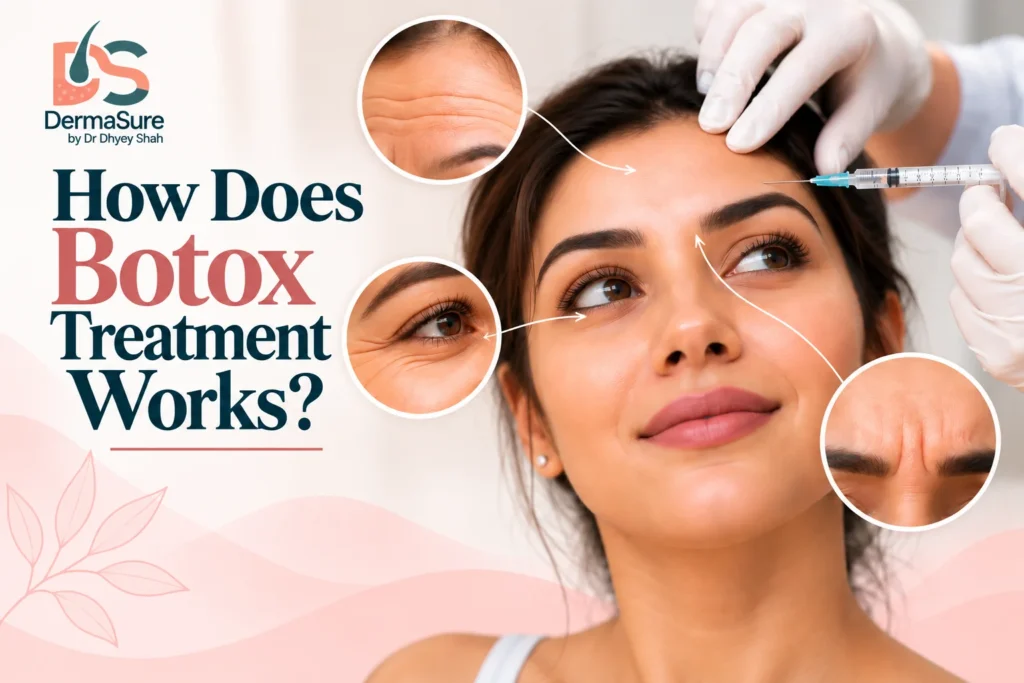
Fine lines and wrinkles are a natural part of facial aging, but repeated facial movements can make certain lines more noticeable over time. Benefits of botox for face are mainly associated with temporarily reducing the appearance of wrinkles caused by repeated muscle movement. By relaxing selected facial muscles, botulinum toxin can soften dynamic lines while allowing an appropriately treated face to retain natural expression.
However, Botox is not a filler and does not restore lost facial volume. Whether it is appropriate depends on the type of wrinkle, facial anatomy, treatment goals and individual medical considerations. A consultation with a qualified medical professional is therefore an important part of treatment planning.
What Is Botox for Wrinkles?
Botox is a brand name associated with onabotulinumtoxinA, one type of botulinum toxin used medically and cosmetically. Other botulinum toxin products are also available.
For cosmetic wrinkle treatment, small amounts of botulinum toxin are injected into carefully selected muscles. The treatment temporarily reduces nerve signals that tell those muscles to contract. As muscle activity decreases, the overlying skin can appear smoother and certain expression lines become less noticeable.
Botulinum toxin is particularly useful for dynamic wrinkles—lines that become more visible when facial muscles contract.
Common areas considered for treatment include:
- Forehead lines
- Frown lines between the eyebrows (also called anger lines)
- Crow’s feet around the outer corners of the eyes
- Jawline slimming (masseter muscle), often called “jawtox”
- Eyebrow lift (brow lift)
- Neck bands (platysmal bands)
The exact areas treated depend on the individual assessment, product being used, local regulatory approvals and the clinician’s treatment plan.
How does Botox work for wrinkles?
To understand how Botox works, it helps to understand why dynamic wrinkles develop.
When you repeatedly frown, raise your eyebrows, squint or make other facial expressions, the underlying facial muscles contract. Over time, repeated movement can contribute to lines becoming increasingly visible.
Botulinum toxin temporarily interferes with the communication between the nerve and the targeted muscle. More specifically, it reduces the release of acetylcholine at the neuromuscular junction, decreasing muscle contraction.
As the targeted muscle becomes less active, the skin above it is subjected to less repetitive folding. This can soften the appearance of certain dynamic wrinkles.
Benefits of Botox Treatment For Face
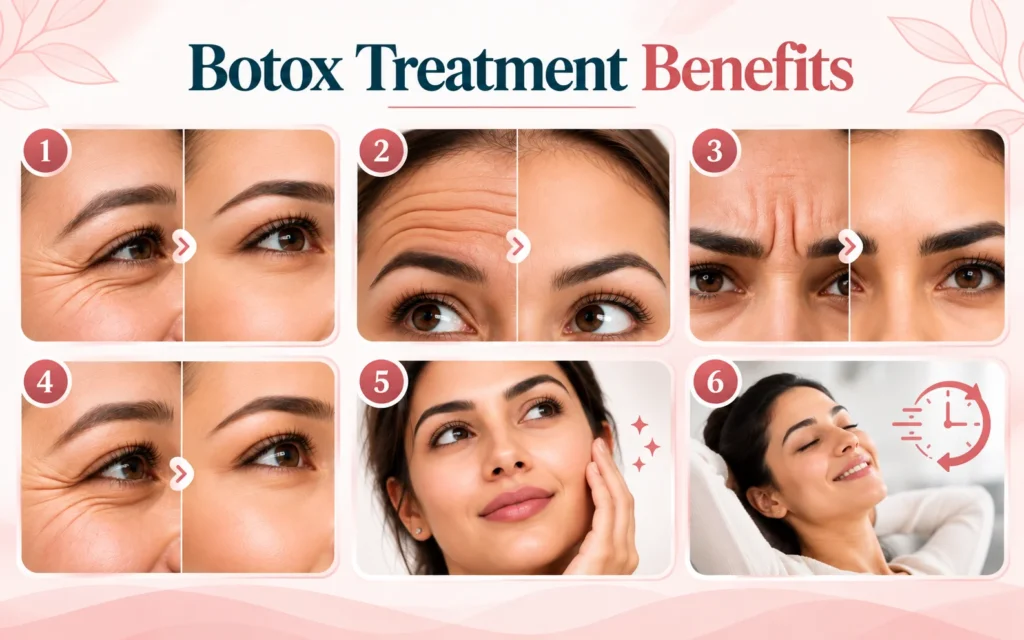
The potential benefits vary according to the individual’s facial anatomy, muscle activity, wrinkle type and treatment plan.
1. Softens dynamic facial wrinkles
One of the main reasons people consider Botox is to reduce the appearance of expression-related lines.
When the targeted muscles contract less strongly, the associated wrinkles may become less noticeable.
2. Helps improve forehead lines
Botulinum toxin can be used to address selected horizontal forehead lines when appropriate treatment planning and dosing are used.
Because forehead muscles also contribute to eyebrow position, treatment requires careful assessment rather than simply treating every visible line.
3. Helps reduce frown lines
Vertical lines between the eyebrows can become prominent with repeated frowning. Botulinum toxin can temporarily reduce the muscle activity responsible for these expression lines.
4. Can soften crow’s feet
Crow’s feet are lines around the outer corners of the eyes that become more visible during smiling or squinting.
Botulinum toxin can reduce the muscle activity contributing to these dynamic lines when treatment is appropriate.
5. Can provide a subtle, refreshed appearance
Appropriate treatment is generally intended to soften selected lines rather than eliminate every facial movement.
The AAD notes that dermatologists aim to weaken and relax targeted muscles while preserving natural facial expression.
6. Requires little or no traditional downtime
Botulinum toxin injections are generally performed as an outpatient procedure. Many people can return to everyday activities quickly, although specific aftercare instructions should be followed.
Benefits of Botox for Face: What Can It Improve?
The benefits of Botox for the face are most relevant when the concern is caused substantially by muscle movement.
| Concern | Can Botox help? |
| Frown lines (anger lines) | Often appropriate |
| Forehead expression lines | May be appropriate |
| Jawline slimming (“jawtox”) | May be appropriate when the jaw (masseter) muscle is prominent |
| Low or drooping eyebrows (brow lift) | May be appropriate in selected cases |
| Neck bands (platysmal bands) | May be appropriate after assessment |
| Deep folds caused primarily by volume loss | Another treatment may be more appropriate |
This distinction matters because not every line on the face has the same underlying cause.
A consultation helps determine whether muscle activity, skin quality, volume loss, or a combination of factors contributes to the concern.
How Long Does Botox Take to Work?
Botox does not usually produce its full cosmetic effect immediately.
Some people begin noticing changes within several days. The AAD states that most people see results within 3–7 days, while Mayo Clinic notes that Botox injections generally begin working within 1–3 days and that full results can take longer. A 2026 clinical review describes approximately two weeks for the full clinical effect to develop.
This means patients should not judge the final result immediately after treatment.
A realistic timeline
Immediately after treatment:
Small injection-site bumps, mild redness, swelling or tenderness may occur.
First few days:
The targeted muscle gradually becomes less active.
Around 1 week:
Changes may become increasingly noticeable.
Around 10–14 days:
The final effect is commonly assessed.
The exact timeline can vary according to the product, treatment area, dose, muscle activity and individual response.
How Long Do Botox Results Last?
Botox results are temporary.
The AAD states that effects for facial lines and wrinkles commonly last approximately 4 to 6 months, sometimes longer.
Mayo Clinic similarly notes that repeat treatment is generally required to maintain the benefit.
The duration can vary between individuals because of factors such as
- Treatment area
- Muscle strength
- Product used
- Dose
- Individual response
- Treatment technique
can influence the outcome.
When muscle activity gradually returns, treated lines may begin to become visible again.
What Happens During a Botox Treatment?
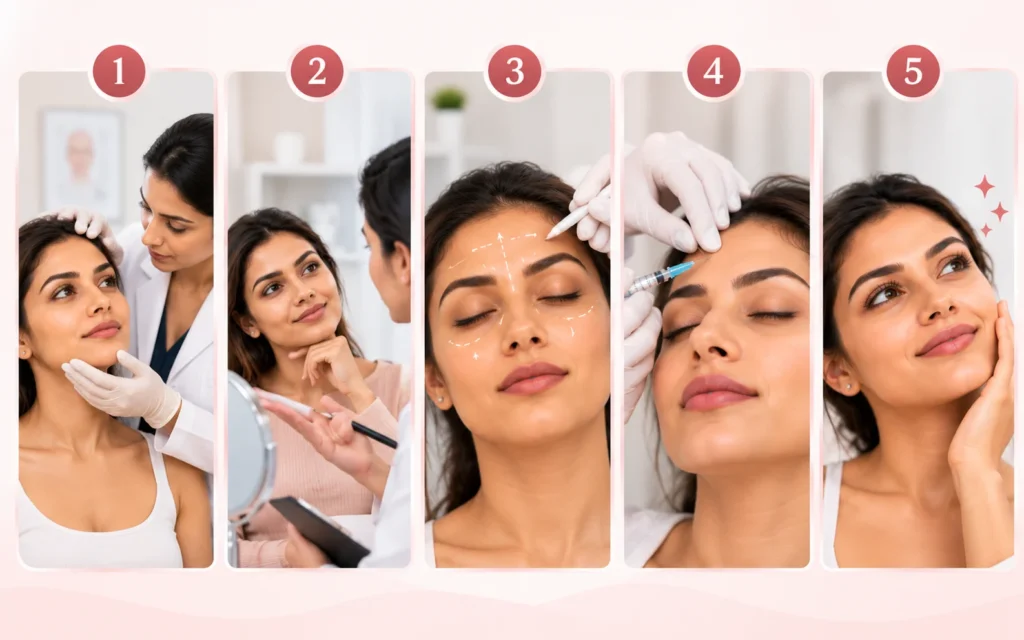
A typical cosmetic Botox consultation may involve:
1. Facial assessment
The clinician evaluates facial movement, wrinkle patterns, anatomy and the areas of concern.
2. Discussion of goals
The treatment plan should be based on the patient’s goals rather than applying the same injection pattern to everyone.
3. Treatment planning
The clinician determines which muscles may benefit from treatment and how much product may be appropriate.
4. Injection
Very small amounts of botulinum toxin are injected into selected areas using a fine needle.
5. Aftercare guidance
You receive instructions about activities, rubbing or massaging the treated areas and when to contact the clinic if concerns arise.
Botox Benefits and Risks
Like any medical procedure, Botox has potential benefits as well as risks.
Common or temporary effects
Possible effects around the injection sites include:
- Mild redness
- Swelling
- Tenderness
- Bruising
- Headache
These are generally temporary.
Less common effects
Depending on the treatment area and injection technique, unwanted effects can include:
- Temporary eyelid drooping
- Eyebrow drooping
- Facial asymmetry
- Changes in facial movement
- Uneven appearance
These risks are among the reasons precise knowledge of facial anatomy and appropriate injection technique matter.
Rare but serious symptoms
Although uncommon, botulinum toxin can cause more serious effects if the toxin spreads beyond the intended area.
Seek urgent medical attention if significant symptoms such as
- Difficulty breathing
- Difficulty swallowing
- Difficulty speaking
- Widespread muscle weakness
- Significant vision problems
occur after treatment.
However, these are extremely rare with expert dermatologists
Patients should discuss their medical history, medications, allergies, previous procedures and other relevant factors with their healthcare provider before treatment.
How Long After Botox Can You Exercise?
Exercise recommendations can vary between clinicians.

Many aesthetic practices recommend a longer precautionary period—often around 24 hours for strenuous exercise. This is reflected in Dr. Dhyey Shah’s current anti-wrinkle treatment aftercare instructions.
Because recommendations are not completely uniform, patients should follow the specific instructions given by the clinician who performed the treatment.
For example, your clinician may advise temporarily avoiding:
- High-intensity workouts
- Heavy lifting
- Activities that cause significant facial flushing
- Pressure or rubbing over treated areas
The safest approach is to follow the individualized post-treatment instructions provided after your procedure.
Botox Aftercare: What Should You Avoid?
After Botox, your clinician may advise you to:
- Avoid rubbing or massaging treated areas
- Follow the recommended exercise restriction
- Avoid unnecessary pressure on injection sites
- Follow any specific instructions regarding lying down or heat exposure
- Contact the clinic if you experience unusual symptoms
The AAD specifically recommends avoiding rubbing or massaging the treated areas and waiting two hours before strenuous activity.
Some clinics recommend additional precautions, such as avoiding intense exercise or heat exposure for 24 hours. These recommendations should be considered alongside the instructions provided by your treating clinician.
Who May Be a Suitable Candidate for Botox?
Botox may be considered by adults who are concerned about dynamic facial wrinkles and are looking for a temporary reduction in their appearance.
However, treatment is not appropriate for everyone.
A medical consultation is particularly important if you:
- Have a neuromuscular condition
- Have an allergy to ingredients in the product
- Are taking medications that may affect treatment
- Have previously experienced complications from injectable treatments
- Are pregnant or breastfeeding
- Have an active infection at the intended injection site
The decision should be based on individual medical assessment rather than age or a photograph alone.
Botox vs. Dermal Fillers: What’s the Difference?
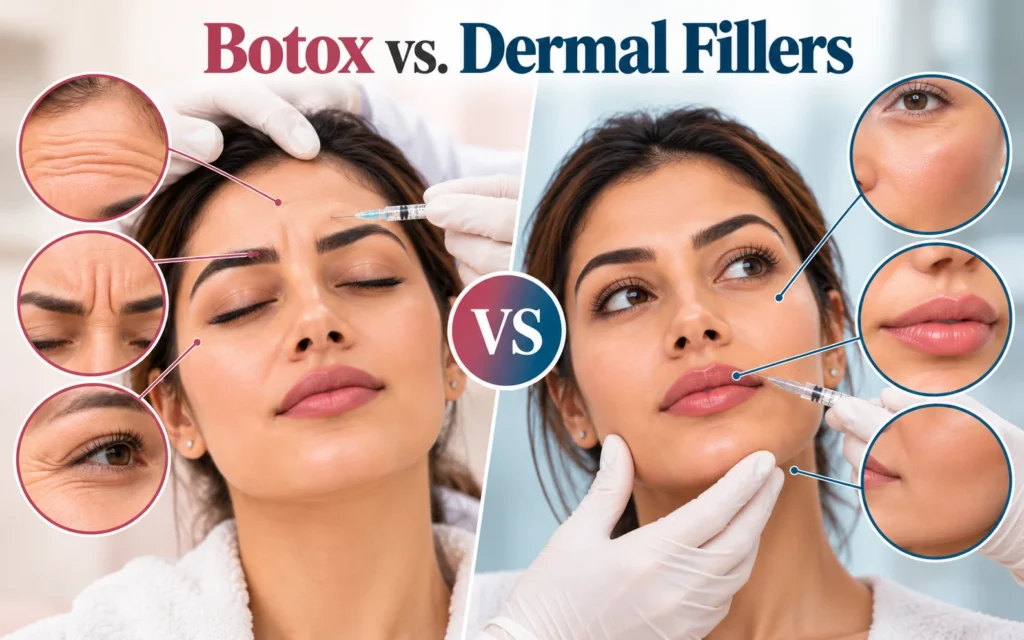
Although both are injectable aesthetic treatments, they work differently.
| Botox / Botulinum Toxin | Dermal Fillers |
| Temporarily reduces targeted muscle activity | Adds volume to selected areas |
| Primarily useful for dynamic wrinkles | Often used for volume loss and contouring |
| Does not physically fill a wrinkle | Physically adds injectable material |
| Commonly used for selected forehead, frown and eye-area lines | May be used for lips, cheeks, chin and other areas depending on product and indication |
| Effects are temporary | Duration varies by filler and treatment area |
Botulinum toxin products are injectable drugs rather than dermal fillers. The FDA specifically distinguishes the two categories.
Sometimes different treatments may be considered for different concerns, but that decision should follow an individual assessment.
What If You Stop Botox Treatments?
Botox does not permanently change the natural aging process.
As its effect wears off, muscle activity gradually returns and treated lines may become visible again.
Stopping treatment does not mean that your face suddenly becomes “worse” because you stopped Botox. The appearance generally returns toward its untreated state as the effect fades.
Whether someone continues, pauses or stops treatment is an individual decision.
Frequently Asked Questions About Botox for Wrinkles
How does Botox work for wrinkles?
Botulinum toxin temporarily reduces nerve signals to selected facial muscles. This decreases muscle contraction and can soften wrinkles that are caused or worsened by repeated facial movement.
How long does Botox take to work?
Some changes may become noticeable within a few days, but the full cosmetic effect is commonly assessed around 10–14 days. Individual results vary.
What are the benefits of Botox for the face?
Potential benefits include softening dynamic forehead lines, frown lines and crow’s feet and creating a smoother appearance while maintaining natural facial expression when appropriately administered.
How long do Botox results last?
Results commonly last around 3–4 months, although duration can vary and some people may experience effects for longer.
How long after Botox can you exercise?
Recommendations vary. The AAD advises waiting two hours before strenuous activity, while many clinicians recommend avoiding strenuous exercise for approximately 24 hours. Follow the specific instructions provided by your treating clinician.
What are the main Botox benefits and risks?
Benefits may include temporary softening of dynamic facial wrinkles. Risks can include bruising, swelling, headache, temporary eyelid or eyebrow drooping and other unwanted effects; rare serious symptoms require urgent medical attention.
Is Botox the same as a dermal filler?
No. Botox is a botulinum toxin product that temporarily reduces muscle activity, while dermal fillers are injectable materials used primarily to add volume or restore contour.
Does Botox permanently remove wrinkles?
No. Botox temporarily reduces muscle activity and therefore provides temporary improvement. Wrinkles can gradually become visible again as muscle activity returns.
Final Thoughts
Botox can be an effective option for people concerned about dynamic facial wrinkles, but the best results depend on appropriate patient selection, treatment planning and precise administration.
Understanding how Botox works, its potential benefits, realistic results, risks and aftercare can help you make an informed decision. Because facial anatomy and wrinkle patterns differ from person to person, an in-person assessment is important before deciding whether botulinum toxin is appropriate for you.
For patients considering anti-wrinkle treatment in Ahmedabad, Dr. Dhyey Shah’s Dermasure Clinic provides consultation and personalized treatment planning for Botox and other aesthetic concerns. The clinic’s current treatment information describes Botox as a physician-led treatment with individualized planning and follow-up.