Waxing every three weeks, threading that hurts, razor bumps and dark underarms – almost every patient who asks me about laser has tried all of these. And then comes the big worry: “Doctor, my skin is brown. Will laser burn it or make it darker?” It is a fair question. Laser hair removal for Indian skin is safe and works well but only when the right laser, the right settings and the right precautions are used. In this article, I will explain how laser works, what results you can honestly expect, and how to keep your skin safe, whether you want to treat your face, underarms, bikini area or, for men, the beard line, chest or back.
Why Indian Skin Needs Extra Care
Laser works by targeting melanin, the dark pigment in the hair. The problem is that Indian skin also has more melanin than fair skin. Most of us fall in skin types IV and V on the Fitzpatrick scale, the scale doctors use to grade skin colour and how it reacts to sun. So the laser has to tell the difference between the dark hair root and the brown skin around it.
If the energy is too high, or the wrong type of laser is used, the skin absorbs the heat. This can cause burns, blisters, or dark patches called post-inflammatory hyperpigmentation (PIH). Light patches can also happen with too much heat. Tanned skin carries even more risk, and in a sunny city like Ahmedabad, many people have some tan on the arms, legs and face without realising it. This is why laser on Indian skin is not a “one setting for everyone” treatment.
How Laser Hair Reduction Works
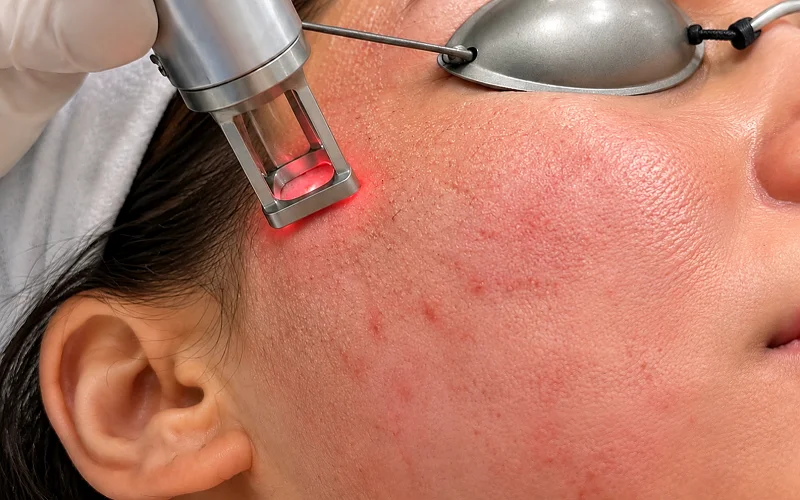
The laser sends a beam of light into the skin. The dark pigment in the hair absorbs this light and turns it into heat. The heat travels down the hair and damages the root (follicle), so it cannot grow a thick hair again. Doctors call this “selective photothermolysis” – heating only the target and sparing the skin around it.
But not all hairs are in the growing (anagen) phase at the same time. Laser works best on hairs that are actively growing, so each session catches only a part of the hair. That is why you need a series of sessions, a few weeks apart. The American Academy of Dermatology says the first treatment usually reduces hair by about 10 to 25 percent, and each session after that adds to the result.
Is it permanent?
Let me be honest here. The correct medical term is “long-term hair reduction”, not permanent hair removal, and the Indian dermatology guidelines also recommend this wording. Most of the treated hair does not come back, and the hair that does grow back is usually thinner, lighter and slower. Some people need a maintenance session once or twice a year, especially with hormonal hair growth.
Which Laser Is Best for Laser Hair Removal for Indian Skin?
Not every machine sold as “laser” is suitable for brown skin. Here is a simple comparison:
| Technology | Wavelength | For Indian skin |
| Diode laser | About 800–810 nm | Very good for most Indian skin types with proper cooling and settings |
| Long-pulsed Nd:YAG | 1064 nm | Safest for very dark skin; goes deeper and spares skin pigment |
| Alexandrite | 755 nm | Strong on fine hair but riskier on darker skin; used with care |
| IPL (intense pulsed light) | 500–1200 nm range | Not a true laser; less precise and higher risk of burns and dark spots on brown skin |
At Dermasure, we use a diode laser (Artemis Premium) for hair reduction, and we do not use IPL. The machine matters, but the settings matter even more. The same machine can be safe in trained hands and harmful in untrained hands.
Is Laser Hair Removal Safe?
Yes, laser hair removal is safe for Indian skin when it is planned and supervised by a qualified doctor. In an Indian study of 71 women with skin types IV to VI treated with an 810 nm diode laser, doctors rated the hair reduction as excellent (75 to 100 percent) in 84.5 percent of patients, six months after the last session. No burns, dark patches or light patches were reported.
At the same time, the American Academy of Dermatology clearly warns that laser hair removal can be dangerous in inexperienced hands, with risks of burns, colour changes and scars. So the real answer is the laser is safe; the risk comes from wrong selection, wrong settings and poor aftercare.
Common myths I hear in my clinic

- Laser causes cancer: No. Laser hair removal uses non-ionising light that acts on the hair root in the skin. It is not like X-rays or UV rays.
- Laser increases sweating: No. Laser targets hair roots, not sweat glands.
- Hair grows back thicker: No. Treated hair grows back thinner, if at all. Rarely, fine hair near the treated area (for example on the face, neck or upper back) can become darker, which a dermatologist can identify and manage.
- Laser makes skin darker: Not when done correctly. In fact, many people see less darkness over time because they stop waxing and shaving.
Benefits of Laser Hair Removal
- Long-term reduction of thick, dark hair after a full course of sessions
- Fewer ingrown hairs, razor bumps and boils from shaving or waxing
- Less darkness and roughness caused by repeated waxing, threading and shaving
- Saves time and money spent on regular waxing and parlour visits
- Quick sessions: small areas like the upper lip or underarms take only a few minutes
- Precise: it treats the hair root without harming the skin when done properly
- Useful for medical problems like hormonal (PCOS-related) facial hair and beard bumps in men
Laser Hair Removal for Underarms
Laser hair removal for underarms is the most popular request in my clinic, and the underarm is also one of the best responding areas. Underarm hair is usually thick and dark, which the laser targets easily. The area is small, so a session takes only a few minutes, and most people see a clear difference after three or four sessions.
In Ahmedabad’s heat and humidity, underarm shaving often leads to cuts, ingrown hairs and boils. Waxing and shaving also cause friction, which slowly darkens the skin. Once hair reduces, many patients find that the underarm looks cleaner and smoother. If the darkness is due to other causes, like a condition called acanthosis nigricans, it needs separate medical treatment, which is why I always check the skin first. On the day of your session, do not apply deodorant, powder or cream, and avoid tight clothes and heavy workouts for a day afterwards.
Laser Hair Removal for Bikini Area
Laser hair removal for the bikini area is a very common request, both for hygiene and comfort, and to stop the cycle of painful waxing and ingrown hairs. You can choose a bikini line (only the hair outside the underwear line) or a fuller treatment of the area.
Bikini hair is thick and coarse, so it responds well, but it can be stubborn. In the Indian diode laser study, the bikini area was slower to respond than other areas, and many women needed extra sessions. The skin here is also more sensitive and darkens easily, so settings must be gentle and a numbing cream can be used if you wish. Shave the area a day before, avoid waxing for at least four weeks before, and wear loose cotton clothes after the session. If you have any active infection, boils or cuts in the area, we wait until they heal.
Laser Hair Removal for Men
More and more men now ask about laser hair removal for men and not only for looks. Common areas are:
- Beard line and neck: for a sharp, clean shape and to stop razor bumps and ingrown hair on the neck (pseudofolliculitis barbae)
- Chest, back and shoulders: for thick body hair that is difficult to shave or wax
- Ears, nose bridge and upper cheeks
Men usually have thicker and denser hair, so they may need more sessions than women for the same area. Beard shaping needs careful planning, because once the hair is reduced, the shape cannot be easily reversed. So decide your beard line with your doctor before the first session. On the upper back and shoulders, fine hair can rarely become darker after laser, so these areas need to be assessed properly.
Facial Hair in Women and PCOS
Many young women come with hair on the upper lip, chin, jawline and neck. Laser helps a lot here, but I always ask about irregular periods, acne, weight gain or hair thinning on the scalp. These can be signs of PCOS or other hormonal problems. Laser reduces the hair, but it does not treat the hormones, so if the cause is not treated, new hair keeps coming. In such cases, we combine laser with medical treatment, and maintenance sessions are usually needed.
Sessions, Results and What to Expect
| Area | Usual sessions | Gap between sessions |
| Upper lip, chin, face | 6–8 or more | About 4–6 weeks |
| Underarms | 6–8 | About 6–8 weeks |
| Bikini area | 6–8 or more | About 6–8 weeks |
| Arms, legs, back, chest | 6–8 | About 6–8 weeks |
These are general numbers; your plan depends on your skin, hair thickness and hormones. During the session, you will wear eye protection. The laser feels like a warm snap or a rubber band on the skin, and cooling makes it comfortable for most people. After the session, mild redness and small bumps around the hair roots are normal and usually settle within a few hours to a day or two. The treated hair falls out over the next 1 to 3 weeks. Results build slowly, and you will see the full result only after the full course.
Side Effects and Who Should Avoid or Wait
Common and temporary: redness, mild swelling, itching or warmth for one to three days. Less common: dark or light patches, blisters, crusting, infection or a cold sore outbreak around the lips. These are rare when settings are correct, and most dark patches fade with time and treatment such as gentle chemical peels. Contact your doctor if you notice blisters, severe pain or dark spots after a session.
Laser should be delayed or avoided if you:
- Are pregnant
- Have a fresh tan or sunburn on the area
- Have an active infection, boils, cuts or rash in the area
- Are taking or have recently taken isotretinoin for acne, or medicines that make skin sun-sensitive (tell your doctor about all medicines)
- Tend to form keloids or have vitiligo or psoriasis (these need special care)
- Get frequent cold sores (you may need medicine before treating the lips)
- Have white, grey or very light hair, which laser cannot target
If you have an active skin problem in the area, we treat it first with the proper skin disease treatment and start laser after it settles.
Before and After Your Session: Simple Do’s and Don’ts
Before
- Avoid sun and tanning for at least two weeks, and use sunscreen daily
- Do not wax, thread, pluck or use hair removal cream for 4 weeks before; shaving is fine
- Shave the area 12 to 24 hours before your session
- Stop retinol, strong acids and bleach creams on the area a few days before, as advised
- Come with clean skin, no deodorant, powder, oil or makeup on the area
After
- Apply the soothing gel or cream your doctor gives and sunscreen on exposed areas
- Avoid hot water baths, steam, sauna, swimming and heavy gym work for 24 to 48 hours
- Do not scrub, scratch or pick the skin
- Between sessions, only shave. Do not wax or thread, because the laser needs the hair root
Why Choose a Dermatologist for Laser Hair Removal?
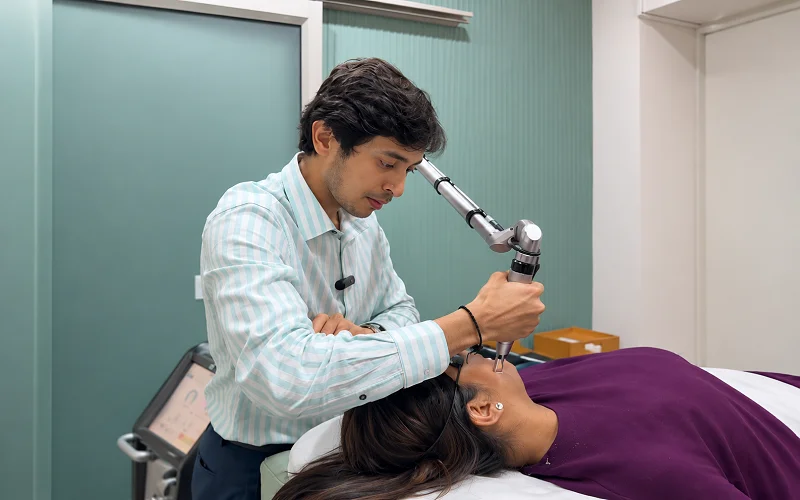
Laser hair removal is a medical procedure, even though many salons offer it. A dermatologist for laser hair removal checks your skin type, tan, hair, hormones and medicines before choosing the settings. The Indian dermatology guidelines say the doctor carries the final responsibility, even if a trained assistant gives the shots. And if any reaction happens, a dermatologist can recognise it early and treat it properly.
Before you sign up for any package, ask these questions:
- Which laser machine is used? Is it a diode or Nd:YAG laser, or IPL?
- Who checks my skin and decides the settings?
- Will you do a test patch if my skin is darker or sensitive?
- What will you do if I get a burn or dark patch?
Be careful of offers that promise “100% permanent”, “painless” or “no side effects”, and very cheap full-body packages. At Dermasure, I personally assess every patient before starting hair removal laser treatment and you can see consented before and after photos of our patients.
What Does It Cost?
Many people search for the permanent laser hair removal cost but there is no single price. The cost depends on the area (upper lip vs. full legs), the number of sessions you need, your hair thickness, and whether hormones are involved. A full course costs more than one wax, but over a few years it often works out cheaper than regular waxing or parlour visits, and it saves a lot of time. I give you a clear plan with the number of sessions and the full cost after examining your skin and hair.
My Advice on Laser Hair Removal for Indian Skin
Laser is one of the best long-term solutions for unwanted hair, and Indian skin is not a reason to fear it. What matters is a proper skin check, the right laser, careful settings, sun protection, and patience through the full course. Do not choose a clinic only because it is cheap or close by. If you are planning laser for your face, underarms, bikini area or body, you can book a consultation at Dermasure, Ambawadi, and I will tell you honestly what results to expect for your skin and hair.
Frequently Asked Questions
Is laser hair removal safe for dark Indian skin?
Yes, when a doctor chooses the right laser (diode or long-pulsed Nd:YAG) and the right settings for your skin, and you avoid tanning before and after sessions.
Does laser hair removal hurt?
It feels like a warm snap or a rubber band on the skin. Cooling makes it comfortable for most people. Sensitive areas like the upper lip and bikini line can feel a little stronger, and a numbing cream can be used.
How many sessions will I need?
Most people need 6 to 8 sessions. Facial hair, bikini hair and hormonal hair often need more, plus maintenance sessions later.
Can I get laser in summer?
Yes, as long as the area is not tanned. Use sunscreen daily and cover treated areas when you are out in the sun.
Can I wax between sessions?
No. Waxing and threading pull out the root, which the laser needs to target. Shaving is fine.
Is laser safe during pregnancy?
There is not enough safety data, so I advise waiting until after delivery.
This article is for general information and does not replace a consultation. Results vary from person to person.